
Built for the Power
Lithium Can't Deliver.
Some jobs need a surge of power in seconds, not a reservoir of energy over hours. That is where lithium iron phosphate stops, held back by its own chemistry. Our supercapacitors run at a sustained 10C, up to twenty times the rate a standard utility battery can hold.
Lithium Iron Phosphate Cannot Be Hurried.
LFP earns its dominant place in stationary storage. The same olivine crystal structure that makes it stable also fixes a speed limit no supplier can engineer away. Ions thread through the lattice only so fast, so a standard utility system holds at roughly 0,5C to 1C. Force it past that point and the voltage sags while heat builds, and the extra heat drives wear that pushes the temperature higher still.
That limit sits in the periodic table, not in anyone's product roadmap. Across the lithium market, the fastest standard product empties in two hours. That is not a design choice. It is the ceiling of the chemistry.
Charge Held Physically. No Bottleneck to Beat.
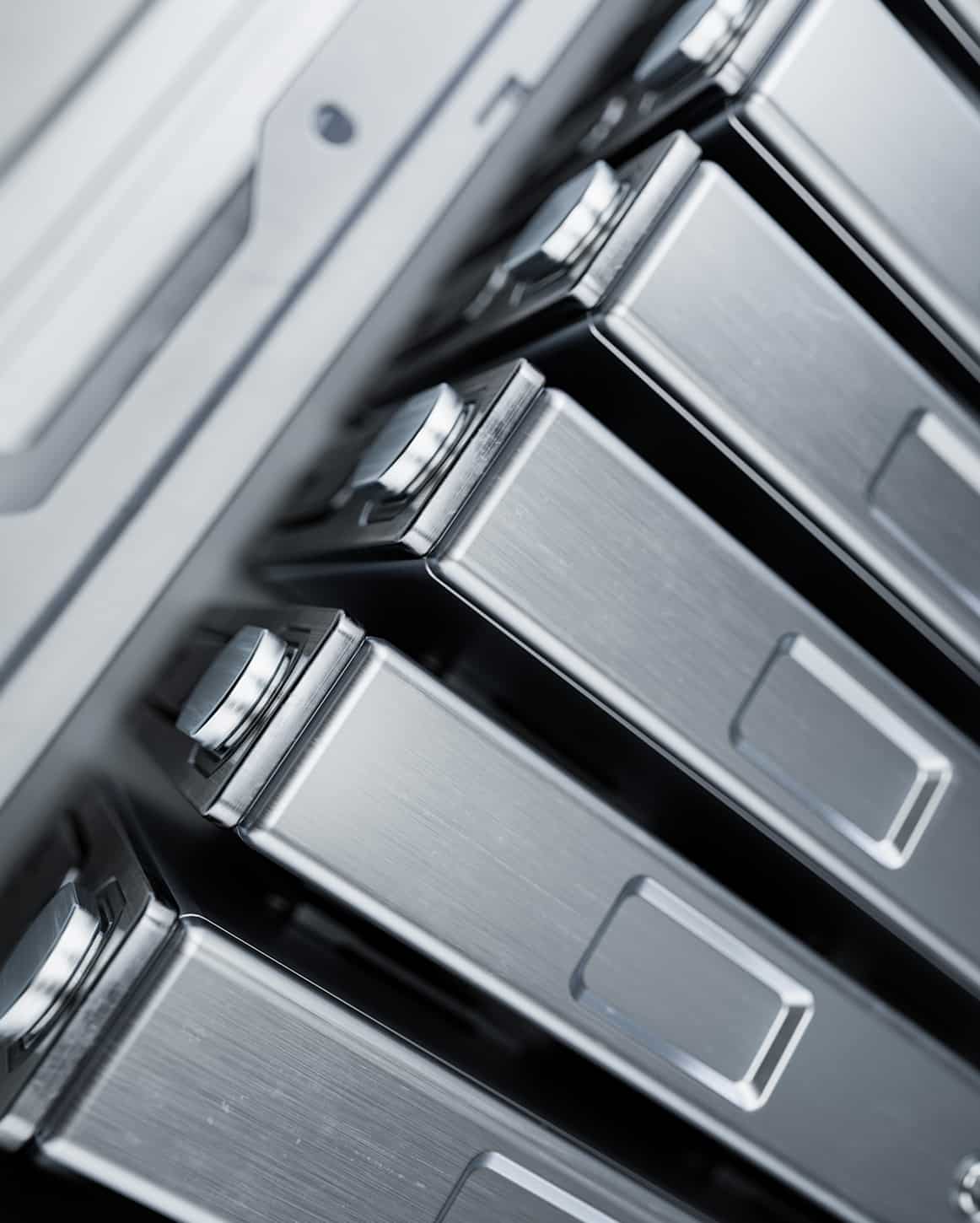
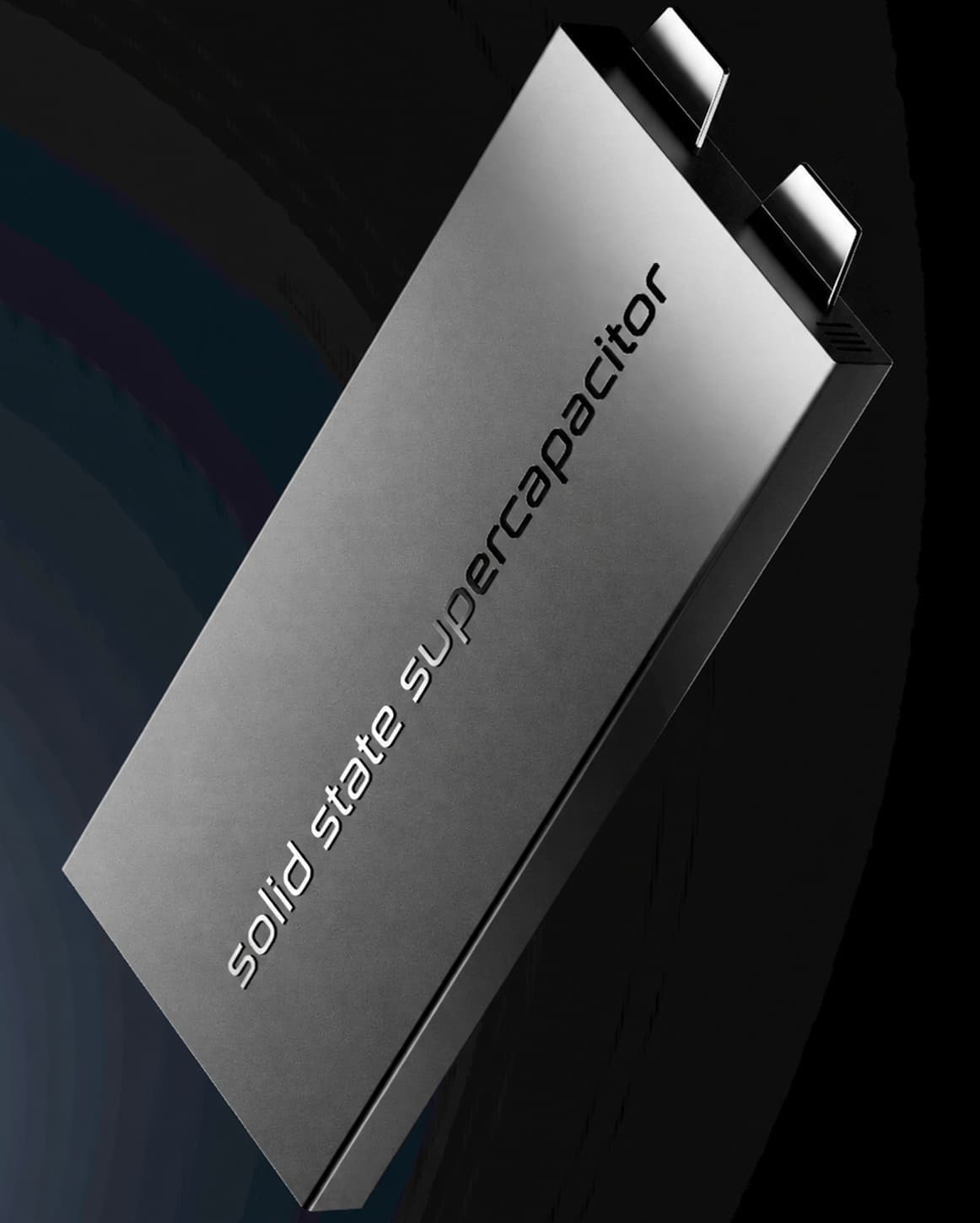
A supercapacitor stores charge on the surface between electrode and electrolyte instead of forcing ions into a lattice. With no chemical reaction to wait on, nothing sets a speed limit. Our cell is rated from 2C for performance work up to 10C for the most demanding power applications, and it holds that rate continuously rather than in a brief pulse.
The physics that gives it the speed also gives it the life: it shrugs off the high-rate cycling that wears a lithium cell out, and it ages barely at all sitting idle. That is up to twenty times the sustained discharge rate of a standard utility battery, and it comes from storing charge physically rather than chemically.
High Power Has to Pass Two Tests, Not One.
The first test is at the cell: can it deliver the current at the rate you need, held steady, without cooking itself? Lithium fails here first. No amount of power electronics will pull a sustained 10C from a cell whose lattice refuses to release ions that quickly.
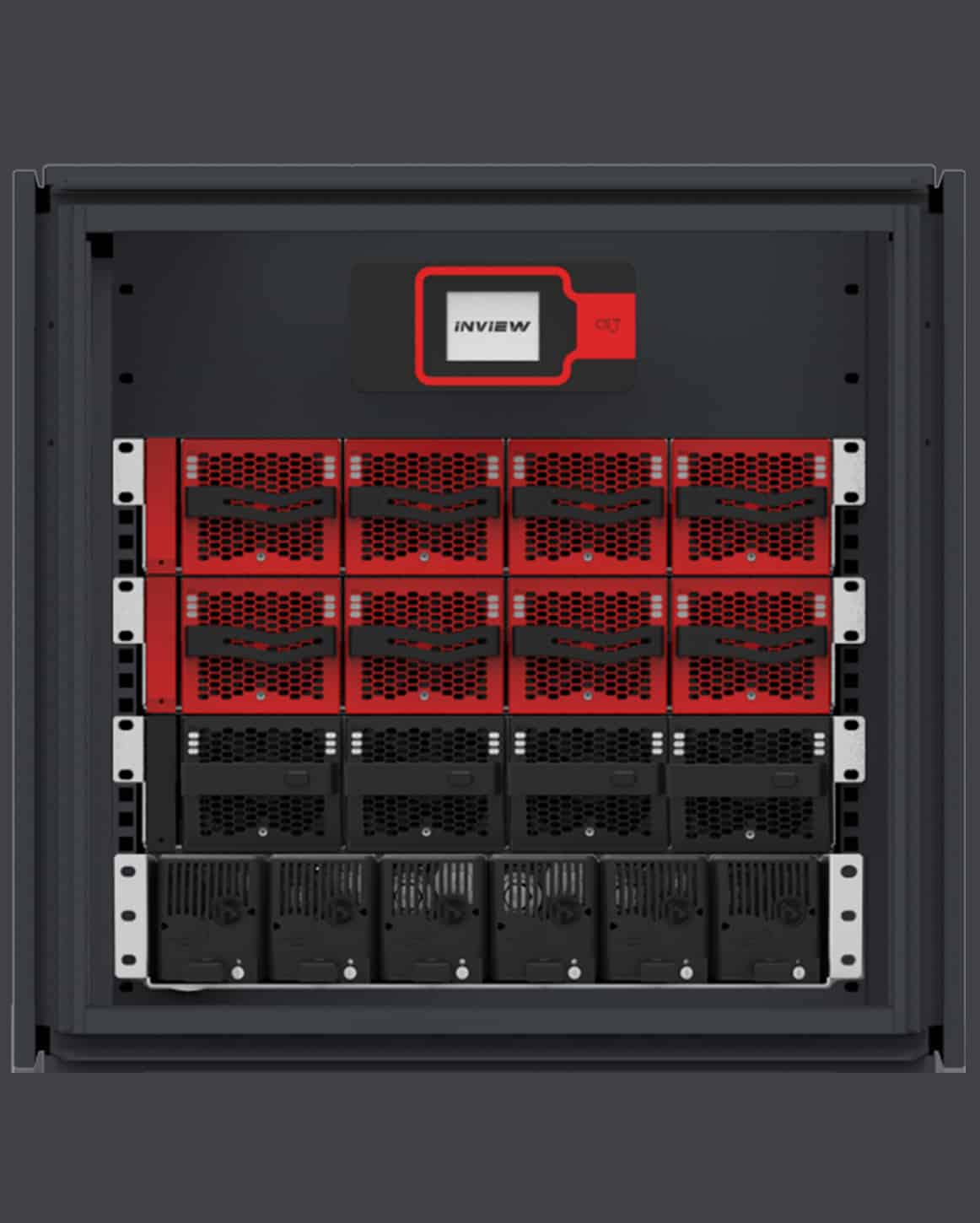
The second test is at the power electronics: is there enough conversion capacity to turn that current into usable grid power? The PCS is sized to power rather than energy, so a 10C system needs roughly twenty times the conversion hardware per kWh of a 0,5C one. A supercapacitor clears the cell test by nature, which leaves only this, a real cost you size to the job. With lithium the wall is physical and fixed. With a supercapacitor it is a line item you scale to the need.
Most Storage Never Needs to Go Faster, and That's Fine.
For most of what gets built today, things like arbitrage and peak shaving, a rate near 0,5C is exactly right.
10C earns its keep where an application genuinely needs power that lithium cannot give, and that set of applications is real and growing. When the value is in how fast you respond, the size of the energy store barely matters, and a supercapacitor answers a question lithium simply cannot.
Technology Snapshot.
| Specification | Value |
|---|---|
| Sustained C-rate | 2C to 10C (performance to ultra-performance) |
| Discharge rate vs standard utility battery | Up to 20× |
| Storage mechanism | Physical / electrostatic (no intercalation) |
| Projected cycle life | > 15.000 cycles |
| Calendar ageing | Negligible |
| Thermal runaway risk | Zero |
| Active cooling required | None |
| Rare metals | None |
| Power scaling | Sized at the PCS, not the cell |
Where It Works.
- Fast Frequency Response (FFR)
- Synthetic Inertia & Ramp Support
- Frequency Containment Reserve
- Crane & Lifting Peak Absorption
- Heavy Welding & Arc Loads
- Port & Shorepower Surges
- Electric Vessel & Fleet Fast Charging
- Grid-Decoupled Charging Buffers
- High-Renewable Microgrid Stability
Quantum Technology and Energy Infrastructure
Preparing for the Post-Quantum Era
Grid-Forming Inverters and Synthetic Inertia
How Battery Storage Replaces the Stability Services That Rotating Generators Once Provided
Supercapacitor or Lithium-Ion? A Buyer's Guide
Comparing commercial and industrial energy storage on safety, cycle life, temperature range, power, and total cost of ownership.
Battery Fire Risk and the Non-Flammable Alternative
How thermal runaway shapes the cost, siting, and insurability of energy storage — and what it means to remove the hazard rather than manage it.
The C-Rate Ceiling
High-Power Storage Beyond the Lithium Limit
Common Questions.
- What is battery C-rate?
- C-rate measures how fast a battery charges or discharges relative to its capacity. 1C means full discharge in one hour, 0,5C in two hours, and 10C in six minutes. A system's duration rating is simply its C-rate expressed in hours.
- What is the maximum C-rate of lithium iron phosphate (LFP) storage?
- Standard utility LFP systems operate at roughly 0,5C to 1C continuous. The olivine crystal structure gives LFP low ionic conductivity and high internal resistance, which caps the sustained discharge rate. Cells can pulse higher briefly but cannot sustain a high rate as a rated capability.
- What C-rate can 247 Energy supercapacitors deliver?
- 247 Energy supercapacitor cells are available from 2C for performance applications to 10C for ultra-performance applications, up to twenty times the sustained discharge rate of a standard utility battery system, because they store charge physically rather than through a chemical reaction.
- Does every storage application need a high C-rate?
- No. Most grid storage handles energy shifting, peak shaving and capacity firming, where 0,5C is the correct and economical answer. High C-rate matters for power applications such as fast frequency response, synthetic inertia, high-power industrial loads and fast charging.
- Why does a higher C-rate cost more?
- A higher C-rate means more power per unit of stored energy, and power must be converted by the PCS, which is sized to power rather than energy. A 10C system needs around twenty times the conversion capacity per kWh of a 0,5C system, so a high C-rate is a deliberate, paid-for specification.
- Why can't LFP suppliers just release a faster product?
- The limit is chemical, not commercial. No amount of added power electronics extracts a sustained 10C from a cell whose lattice will not release ions that quickly. Supercapacitors clear that cell-level limit by design, leaving only PCS capacity to size.
- Which applications actually need 10C storage?
- High-power tasks where the value is in the speed of response rather than hours of energy: fast frequency response, synthetic inertia and ramp support on the grid; crane, welding and port surges in industry; and fast charging of electric vessels and fleets. The energy store stays small because the job is about power, not duration.
- Is 10C storage a different product from 247 Energy C&I storage?
- It is the same supercapacitor technology configured for a different job. C&I Energy Storage targets safety, cycle life and peak shaving for commercial and industrial sites. 10C Energy Storage targets the high-power applications, served from 2C up to 10C, that lithium iron phosphate cannot reach at all.
Talk to 247 Energy.
Whether you are evaluating a project, exploring a partnership or requesting a technical briefing, we want to hear from you.
Get in Touch