
Grid-Scale Storage.
Built to Last.
We develop, build, co-invest and operate battery energy storage parks at 100 MWH and above — delivering the stabilisation capacity that national grids urgently need as renewables grow.
Grids Are Under Stress. Grid Upgrades Take a Decade.
National grids across Europe are under increasing stress as renewable generation grows faster than grid infrastructure can adapt. Upgrade programmes require regulatory alignment across jurisdictions and capital that only pays back over very long timeframes.
Battery Energy Storage Parks are the most effective available response. And they are available now.
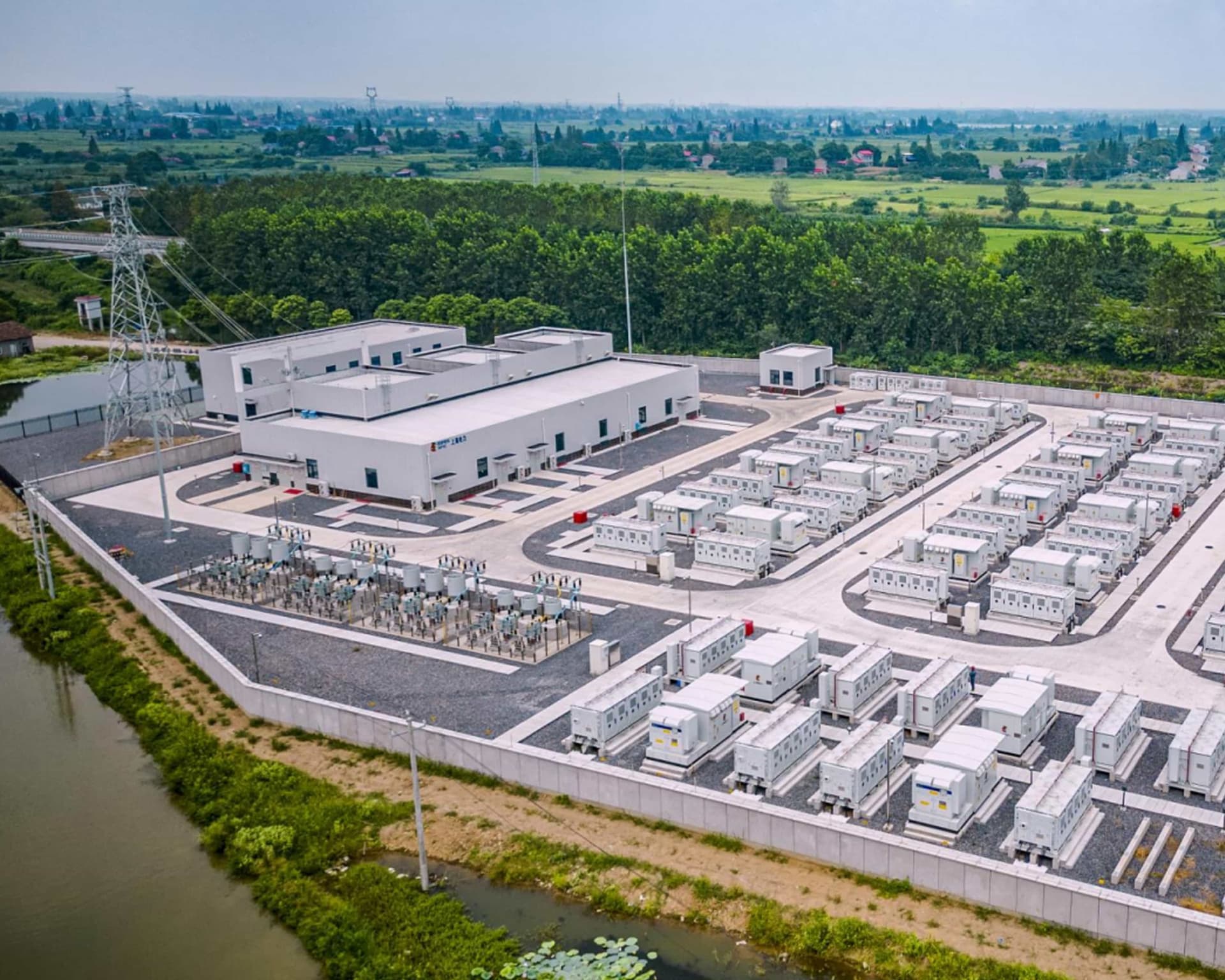
505 MW / 2.025 MWh
Under development across two regions and four countries. Additional projects active in Asia and the Middle East.
Work With Us.
We work with co-investors and project developers who share our long-term view of grid infrastructure. If you have capital to deploy or development capability in a target market, we want to hear from you.
Our pipeline spans Europe, Asia and the Middle East. The right partner can move fast.
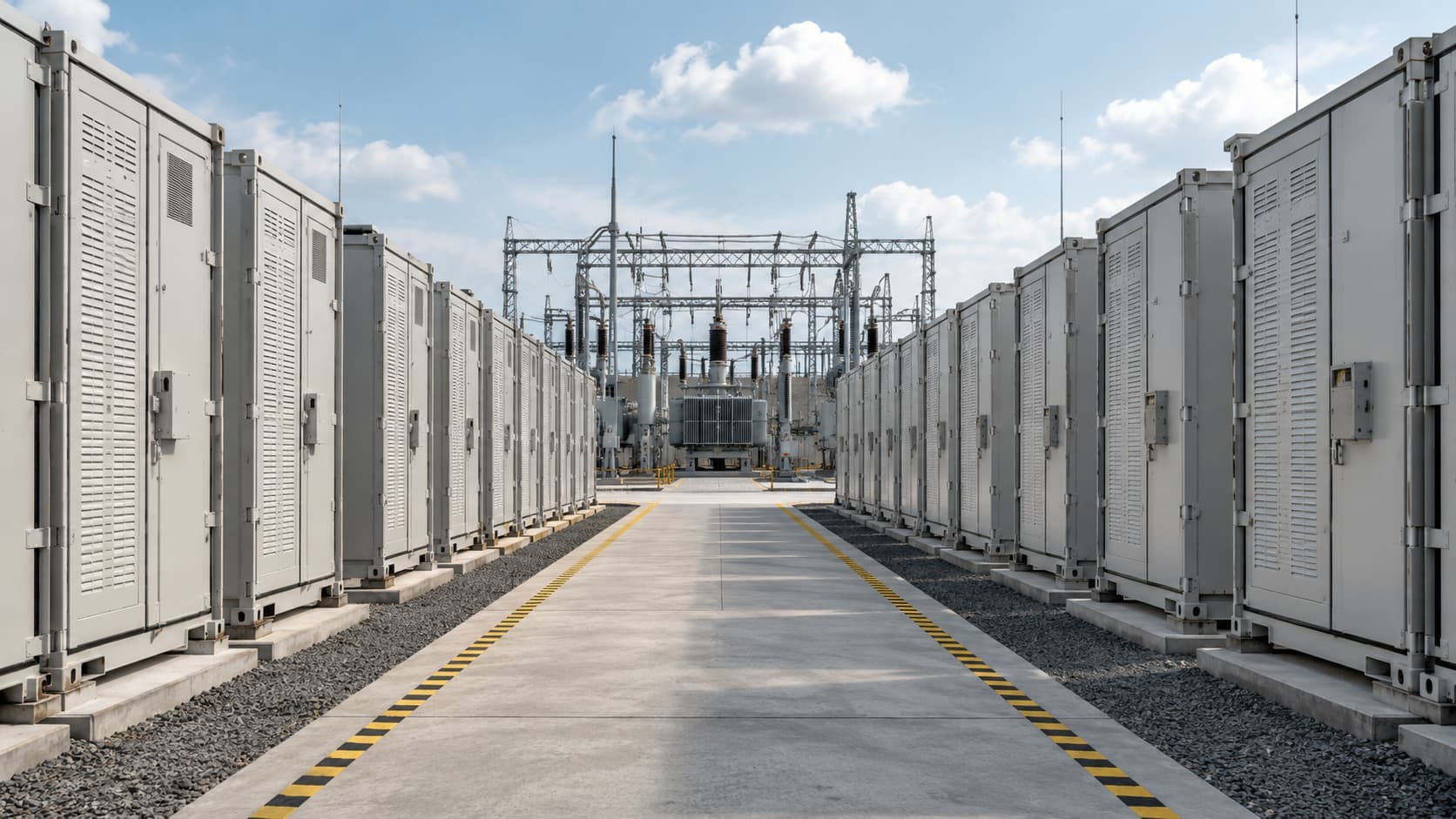
Five Critical Services for Grid Operators.
Frequency Regulation
Absorb and inject power near-instantaneously to maintain grid frequency within tolerance. The fastest and most reliable response available to grid operators.
Load Levelling & Peak Shaving
Reduce demand spikes and lower overall system costs for grid operators and industrial offtakers. Deferred infrastructure spend. Reduced capacity charges.
Voltage Support
Stabilise voltage along transmission and distribution lines as generation profiles become less predictable with growing renewables penetration.
Black Start Capability
Restore grid sections independently after major outages, without requiring an external power source. A decisive capability for critical infrastructure resilience.
Renewable Time-Shifting
Store excess generation from solar and wind and release it when and where the grid needs it. The bridge between intermittent generation and reliable supply.
505 MW / 2.025 MWh
Under development across two regions and five countries. Additional projects active in Asia and the Middle East.
NL 25 MW/100 MWh · BE 30 MW/125 MWh · BE 50 MW/200 MWh · BE 50 MW/200 MWh
BG 50 MW/200 MWh · BG 50 MW/200 MWh · BG 200 MW/800 MWh · RO 50 MW/200 MWh
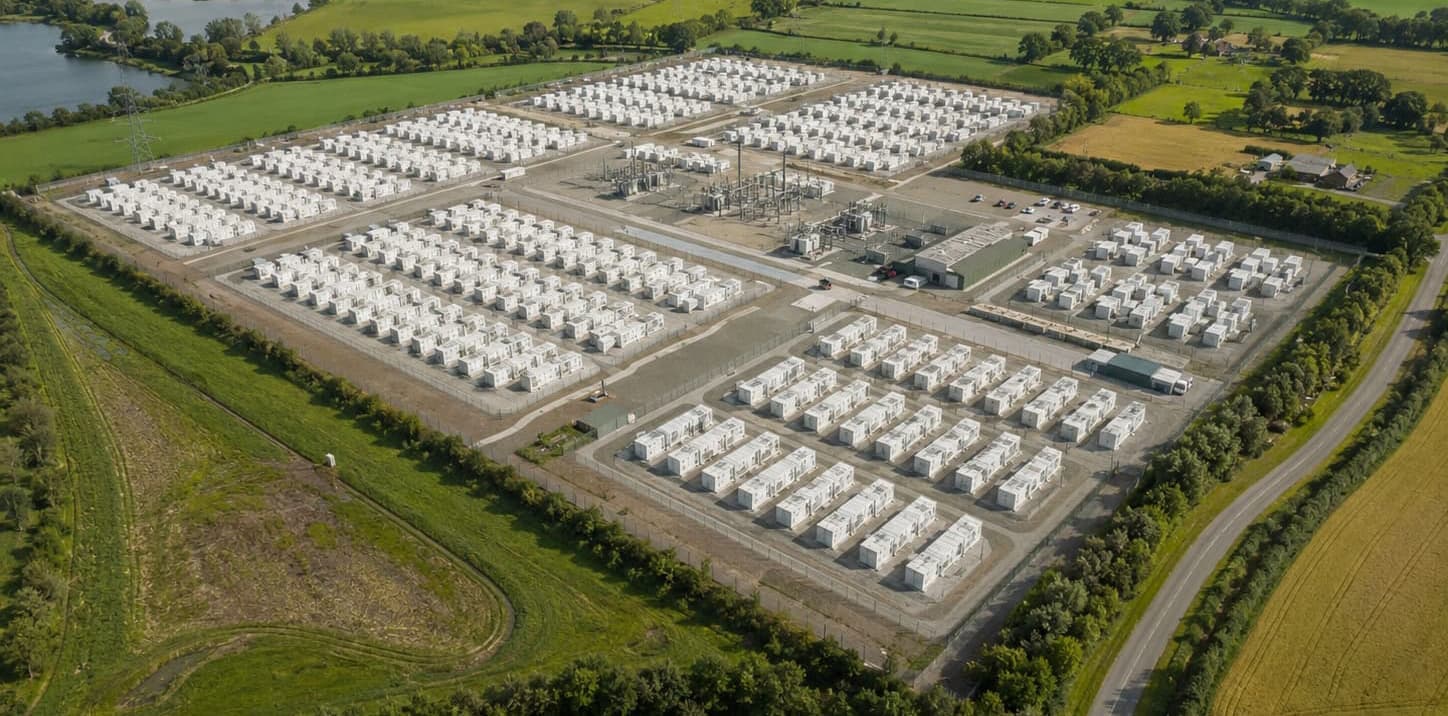
The Case for Utility-Scale Battery Energy Storage Parks
Five grid functions. One investment case.
The Intelligent Battery Park
Digital Twins and AI-Driven Asset Management for Large-Scale Energy Storage
Grid Congestion and the Bridge Past the Queue
How on-site storage and rapid containerised power let industrial sites grow when grid capacity has run out.
Common Questions.
- What is the capacity of 247 Energy's European BESS pipeline?
- 247 Energy has 505 MW / 2.025 MWh under development across two regions and four countries: Belgium and the Netherlands (247 Omega, 155 MW / 625 MWh) and Bulgaria and Romania (247 Delta, 247 Gamma and 247 Epsilon, 350 MW / 1.400 MWh).
- What grid services do 247 Energy BESS parks provide?
- The parks deliver five services: frequency regulation (FCR and aFRR), load levelling and peak shaving, voltage support along transmission lines, black start capability after outages, and renewable energy time-shifting.
- Does 247 Energy work with co-investors on BESS park development?
- Yes. 247 Energy actively works with co-investors and project developers who share a long-term view on grid infrastructure. The focus spans Europe, the Middle East and Asia.
- How long does it take to develop and commission a utility-scale BESS park?
- From site identification to grid connection, a 100 MW+ BESS park typically takes 24-36 months in the European regulatory environment. 247 Energy manages the full development cycle including grid connection studies, permitting, EPC, and grid operator framework agreements.
- What financial return can an investor expect from a BESS park co-investment?
- European BESS park projects currently target double-digit IRRs, driven by FCR and aFRR contract revenues with additional upside from merchant trading strategies. Returns depend on the grid services revenue stack and market conditions in the relevant country. Detailed financial models are available to qualified investors under NDA.
- What battery technology does 247 Energy use in its utility-scale BESS parks?
- 247 Energy utility-scale BESS parks use proven grid-grade lithium iron phosphate (LFP) battery systems. LFP is the preferred cell chemistry for stationary grid storage due to its thermal stability, cycle life, and total cost of ownership at grid scale. Systems are integrated with 247 Energy's proprietary EMS and IIoT monitoring stack.
- Is 247 Energy seeking new co-investment partners for BESS park development?
- Yes. 247 Energy actively works with co-investors and project developers who share a long-term view on grid infrastructure. Opportunities are available across Europe, the Middle East, and Asia. Interested parties should contact 247 Energy to discuss qualification and project fit.
- What is the minimum scale of a 247 Energy BESS park project?
- 247 Energy develops BESS parks at 100 MWh and above. This scale is required to achieve the economics that make grid services contracts and co-investment returns viable. The current European pipeline includes projects ranging from 100 MW to 1 GW per site.
- How does 247 Energy manage BESS park operations after commissioning?
- 247 Energy operates BESS parks on behalf of the project vehicle, covering EMS dispatch, grid services contract delivery, remote monitoring, and scheduled maintenance. The IIoT platform provides real-time performance visibility to all project stakeholders.
Talk to 247 Energy.
Whether you are evaluating a project, exploring a partnership or requesting a technical briefing, we want to hear from you.
Get in Touch