
Supercapacitor vs Lithium-Ion: Why the C&I Market Is Getting This Wrong.
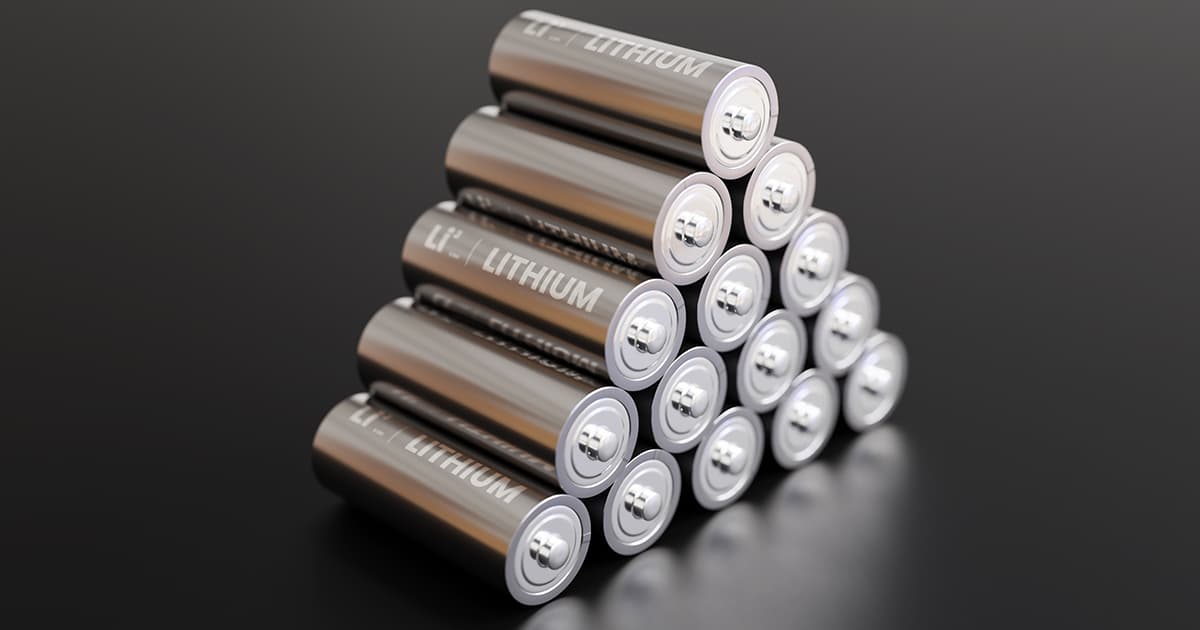
The commercial and industrial energy storage market defaults to lithium-ion. That default ignores cycle life, safety, operating temperature range, and total cost of ownership.
"Ask a facilities manager or energy procurement director to name a commercial energy storage technology and the answer is almost invariably lithium-ion. The chemistry has dominated headlines, procurement decisions, and boardroom presentations for a decade, and it has done so for understandable reasons. Lithium-ion prices have fallen by approximately 89 percent in the decade to 2021, and the technology's energy density, combined with the manufacturing scale that electric vehicle production has brought to the supply chain, has made it the default choice for applications ranging from residential rooftop storage to utility-scale grid parks.\n\nThe default, however, carries hidden costs that simple capital expenditure comparisons do not capture. Lithium-ion cells degrade with each charge-discharge cycle. A system designed for 3,000 to 5,000 cycles, which is a typical specification for commercial lithium-ion storage, will require significant capacity replacement within 8 to 12 years of a 20-year asset life. It operates within a defined temperature window; performance falls sharply in sub-zero conditions and thermal management systems are required to prevent overheating. Most significantly, it carries an inherent risk of thermal runaway, a self-propagating exothermic reaction that, once triggered, is extremely difficult to suppress and can result in fires and toxic gas release at scale.\n\n\"A system specified at 3,000 cycles may require significant capacity replacement within 12 years of a 20-year asset life. The total cost picture looks very different from the upfront comparison.\"\nWhat supercapacitor technology changes\nSupercapacitor-based energy storage, as deployed in 247 Energy's commercial and industrial product range, stores energy electrostatically rather than through electrochemical reactions. This fundamental physical difference produces characteristics that are highly relevant to C&I applications where reliability, safety, and long operating life are priorities. Cycle life is typically 15,000 cycles or greater, five to ten times the practical life of commercial lithium-ion systems. Operating temperature range extends from well below zero to elevated temperatures without performance degradation or thermal management overhead. And the mechanism of energy storage does not support the exothermic chain reactions that produce thermal runaway, eliminating the fire risk that has driven building regulation changes and insurance complications for lithium-ion installations in occupied commercial and industrial environments.\n\nThe energy density of supercapacitors is lower than lithium-ion per unit of weight or volume. This is a genuine constraint. For applications requiring sustained multi-hour discharge, such as overnight load shifting or four-hour capacity market participation, supercapacitors are not the appropriate solution. But the C&I market is not primarily characterised by those applications. Peak demand management, power quality correction, uninterruptible power supply bridging, rapid frequency response, and demand charge avoidance are all high-value applications where the power density of supercapacitors is an advantage and their energy density is sufficient.\n\nThe sites that prove the point\n247 Energy's installations at client sites including Jumbo, WDP, CEVA Logistics, Soudal, and Vodafone Ziggo represent a range of industrial and commercial applications where operational reliability over a long asset life was the decisive criterion. In each case, the absence of thermal runaway risk simplified building consent, reduced insurance complexity, and eliminated the operational protocols that lithium-ion requires. The 15,000-cycle specification means the system installed today will still be performing to original specification when a lithium-ion alternative would be approaching its second major capacity replacement.\n\n\"The absence of thermal runaway simplified building consent, reduced insurance complexity, and eliminated the operational protocols that lithium-ion systems require.\"\nThe lithium-ion default in the C&I market is not irrational. It reflects the technology's real advantages in energy density and upfront capital cost. But it frequently reflects incomplete analysis of total cost, safety implications, and long-term operational complexity. A more complete comparison changes the outcome for a significant share of C&I applications, and that is the analysis 247 Energy invites its clients to conduct before making a final specification decision."
Whitepaper
Supercapacitor or Lithium-Ion? A Buyer's Guide
Comparing commercial and industrial energy storage on safety, cycle life, temperature range, power, and total cost of ownership.
James Troch, CEO — 247 Energy · October 2025 · 10 pages