
A 1 MW charger does not need a 1 MW grid connection.
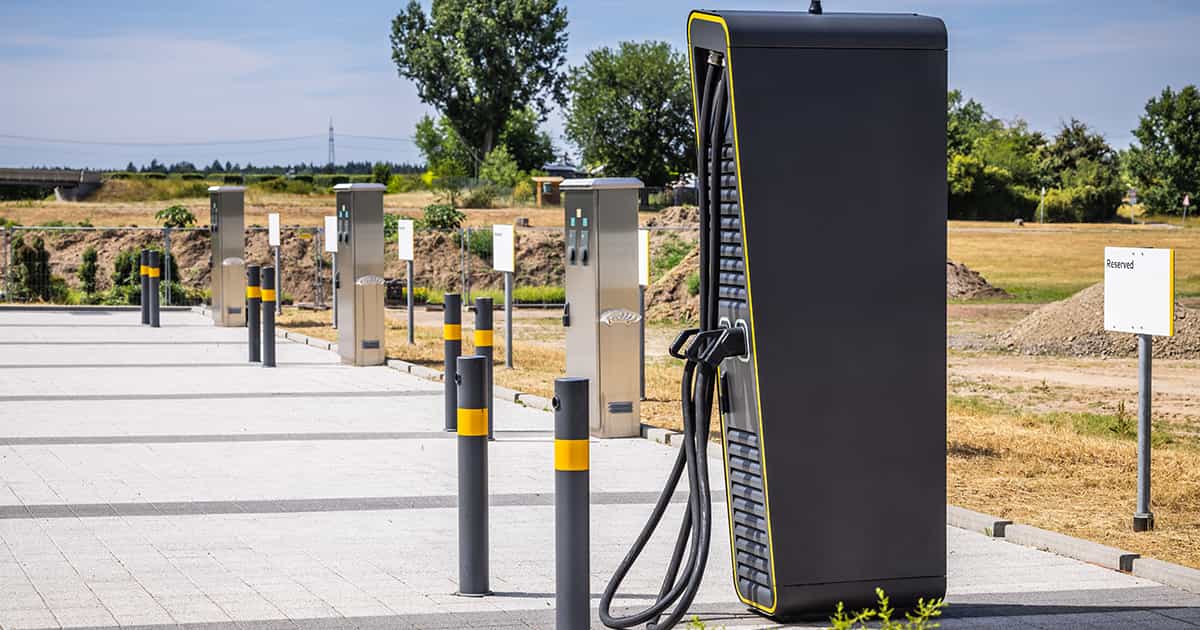
Highway and forecourt charging is colliding with the same wall everyone hits: the grid upgrade you need takes years and costs a fortune. A battery on site removes the wall entirely.
The fast charger is ready. The cable in the ground is not.
Modern hubs want to deliver hundreds of kilowatts to several vehicles at once, but the local network was never sized for that surge. A high-power grid connection can take years to permit and build, and in many locations it is simply unavailable. Operators are left choosing between a crippled site and an open-ended wait.
Charge the battery slowly, discharge it fast.
A buffer battery sips power from a modest connection across the day, then releases it in a burst when cars arrive. This is now the default architecture for new high-power sites because it cuts the required grid capacity by half or more, installs in months rather than years, and shields the operator from time-of-use price spikes. The same buffer can open locations a grid connection would never reach.
Why 247 Energy.
EV duty cycles are punishing many partial charges and discharges every day and that is exactly where supercapacitor storage outperforms. It charges and discharges fast without degrading, lasts for more cycles instead of wearing out in a few years, and runs cool and quiet enough to sit beside a café forecourt. You buy the connection you can get, and we make it perform like the one you wanted.
Whitepaper
Charging the Fleet Without Waiting for the Grid
How on-site storage and power let depots charge electric fleets when the grid connection is too small, too slow, or not there at all.
James Troch, CEO — 247 Energy · March 2026 · 10 pages