
A dredger runs on a river of diesel, and the regulator is now reading the meter.
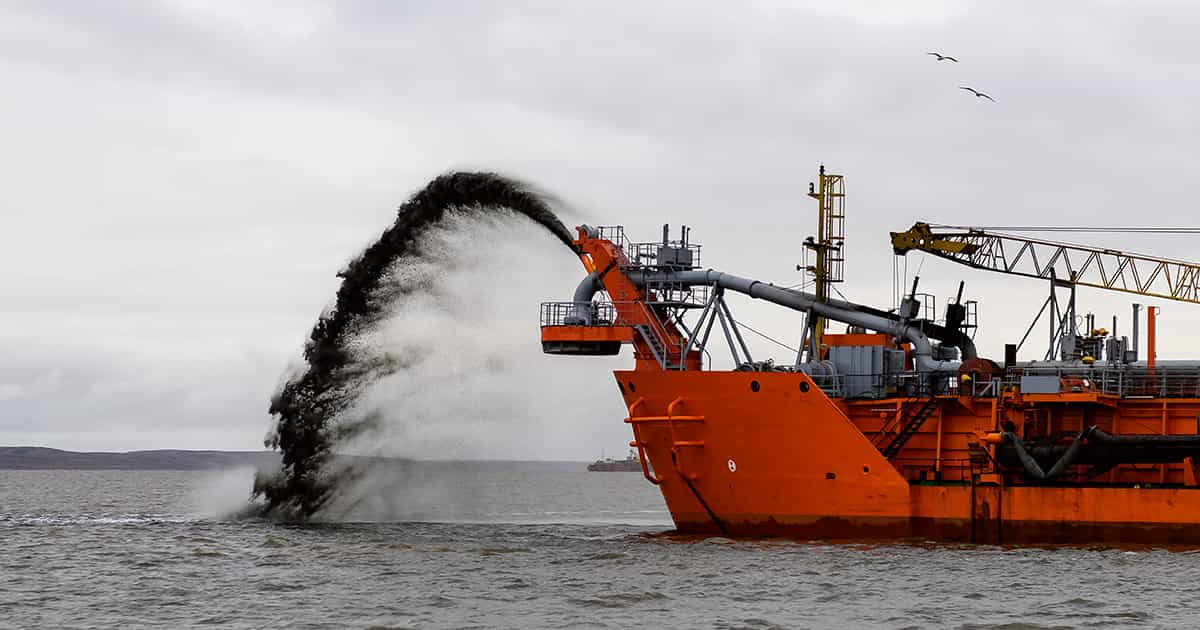
Dredgers and marine construction spreads consume vast diesel volumes at remote sites, just as clients and regulators start scoring every project on its carbon and fuel logistics.
Fuel is the project, and the risk
Dredging and marine civil works run some of the heaviest diesel loads in the economy: pumps, cutter drives, cranes and support plant working flat out, often far from any grid connection, fed by barged or trucked fuel. Fuel is one of the largest line items in the bid and one of the biggest exposures to price swings, to supply delays at remote sites, and increasingly to tenders that score carbon intensity directly. A contractor that cannot show a credible emissions path is starting to lose work it could once win on price alone.
Cleaner generation and stored power on the spread
Two moves cut the diesel. Cleaner on-site generation replaces the worst diesel gensets with gas-fuelled units. And storage takes the violent peaks a cutter biting in, a crane lifting off the generators, so they run smaller, steadier and more efficiently instead of being sized for the worst second of the day. Together they cut fuel, emissions and the number of fuel movements to site. On a long contract, fewer deliveries also means fewer weather-window delays and less exposure to dockside fuel prices.
Why 247 Energy
247 Energy’s containerised LNG power units are operational in under four hours, emit 25% less CO2 and 99% less NOx than diesel, and run at around half the total cost with a hydrogen path for later. Paired with fast supercapacitor storage for the load peaks, they suit the temporary, move-on nature of a marine spread. European-built, containerised, deployable where the work is.
Whitepaper
Charging the Fleet Without Waiting for the Grid
How on-site storage and power let depots charge electric fleets when the grid connection is too small, too slow, or not there at all.
James Troch, CEO — 247 Energy · March 2026 · 10 pages