
A textile mill turns electricity into cloth, and the dye-house into its biggest bill.
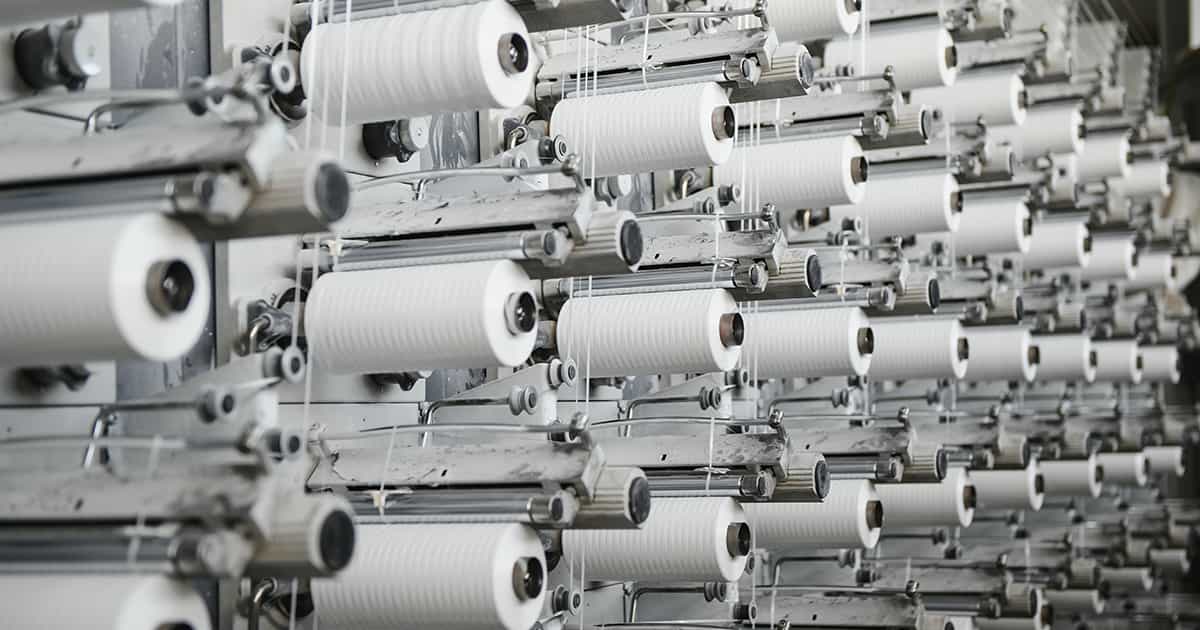
Spinning, weaving and dyeing run continuously on heat, steam and steady motor loads. Energy is among a mill's largest costs, and voltage dips on driven lines waste material fast.
An energy-intensive process under margin pressure
Textile and technical-fabric mills convert power into product at scale. Spinning frames and looms run constant motor loads, while dye-houses and finishing lines need steam, hot water and precise heat. Energy sits among the largest controllable costs in the sector, and European mills compete against regions with cheaper power, so every avoidable charge matters.
Two charges hurt most: the demand peak from many motors and heaters running together, and the waste created when a voltage dip disturbs a driven line and spoils a length of yarn or cloth.
Cut the peak, steady the line
On-site storage charges off-peak and discharges into the mill's busiest hours, lowering the demand component of the bill that a motor-heavy plant pays every month. It rides through the brief sags that interrupt drives and create off-spec material, and it captures rooftop solar that a constrained connection would otherwise refuse to export.
Why 247 Energy
247 Energy supercapacitor systems handle constant daily cycling, with more than 15,000 cycles of projected life and under 10% capacity loss, so a cost-focused mill is not budgeting for replacement cells. The systems are Belgian-built and European-sourced, which keeps a mill competing on cost closer to its supply base.
Whitepaper
Behind the Meter, Ahead of the Curve
Battery Storage for Industrial and Commercial Decarbonisation
James Troch, CEO — 247 Energy · April 2026 · 14 pages