
The pool stays warm whether anyone swims or not and so does the bill.
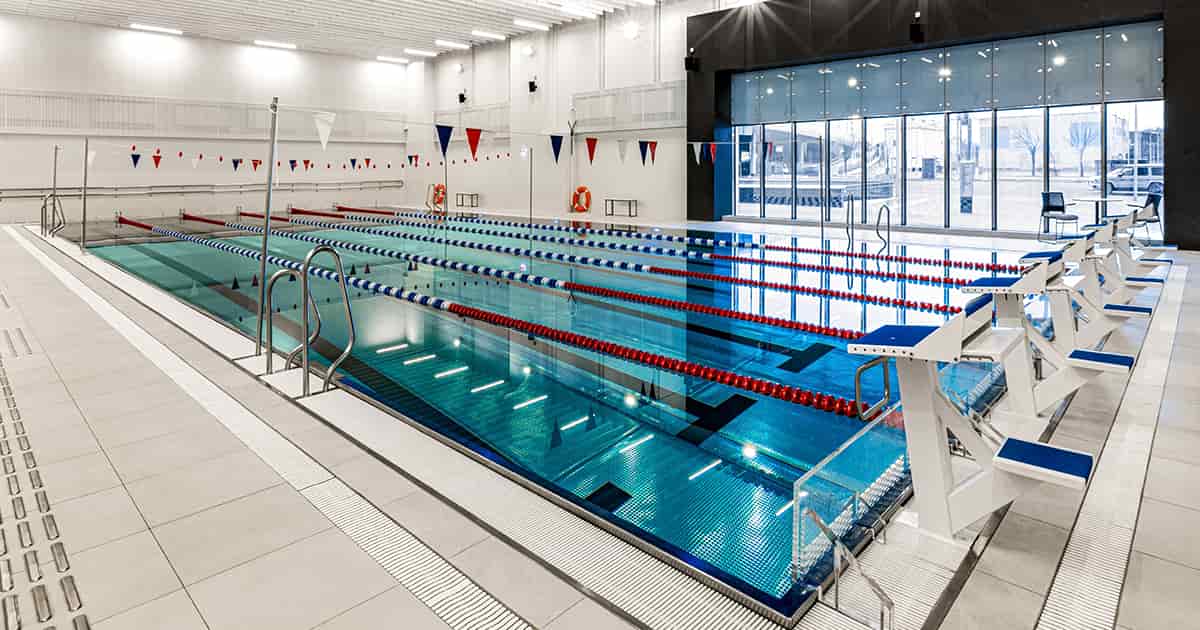
Public pools heat, pump and ventilate around the clock. Energy is their biggest controllable cost, and every demand spike from filtration and heating widens the municipal deficit.
The load that never sleeps
A public pool is one of the most energy-hungry buildings a town owns. Water has to be heated, filtered and circulated every hour of every day; the hall needs constant ventilation and dehumidification; and the plant runs whether twenty people swim or none. When filtration pumps and heat pumps start together, they pull a sharp peak and most energy contracts bill that single highest peak, not the average. For a leisure centre on a fixed municipal budget, a bill that climbs every winter quietly crowds out everything else the building is meant to provide.
Store the peaks, shave the bill
On-site storage breaks the link between when plant switches on and what the grid charges for it. A battery absorbs the surge when pumps and heating fire together, then refills when power is cheap and demand is low. The peak the meter sees flattens, the capacity tariff falls, and rooftop or local solar can be held for the evening swim instead of spilled back to a grid that pays little for it.
Why 247 Energy
A pool hall is a public room full of people, so the storage in it has to be safe and quiet. 247 Energy’s supercapacitor systems are non-flammable, free of thermal runaway, and run at around 55 dB(A) quiet enough to sit inside an occupied building, not in a fenced compound across the car park. European-built, with control software written in-house.
Whitepaper
Grid Congestion and the Bridge Past the Queue
How on-site storage and rapid containerised power let industrial sites grow when grid capacity has run out.
James Troch, CEO — 247 Energy · June 2026 · 10 pages