
Electrifying your lifting equipment is easy. Finding the grid to charge it is not.
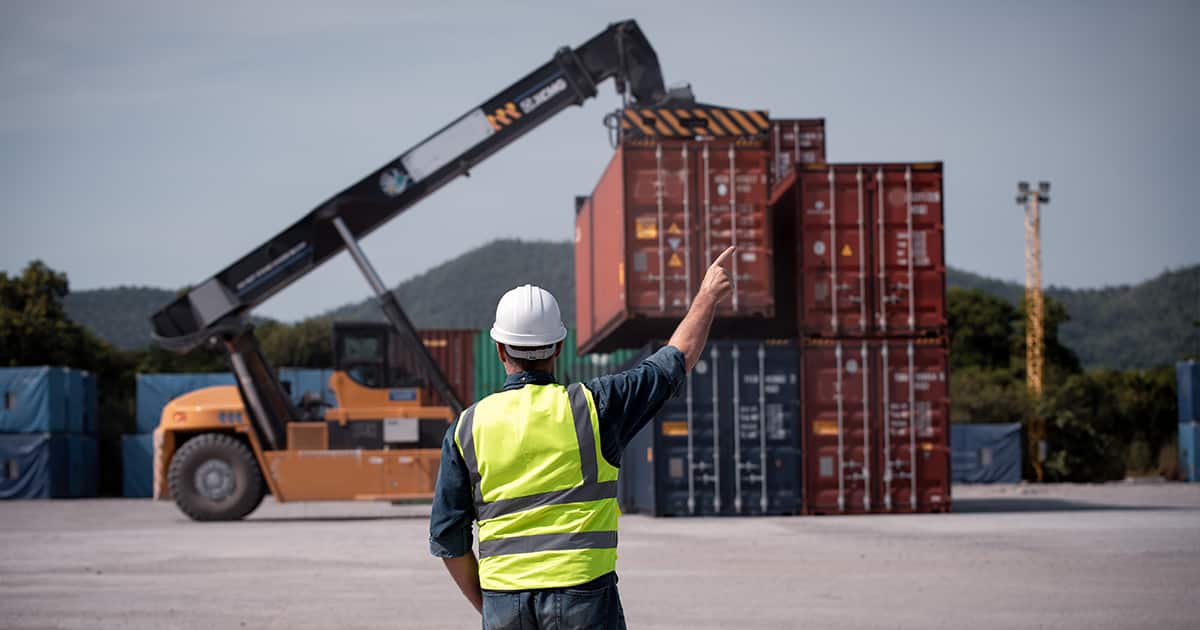
Ports and terminals are swapping diesel cranes and handlers for electric, but the quayside grid was never sized to charge a yard full of heavy machines at once.
Electric machines, Victorian grid
Terminals and material-handling operators are electrifying fast: electric reach stackers, straddle carriers, cranes and lift trucks replacing diesel to meet emission rules and cut fuel. The machines are ready. The connection underneath the quay usually is not. Charge a yard full of heavy equipment in the same window and the site draws a peak the connection cannot carry and a grid upgrade at a port runs years and a fortune. Worse, every lift and regenerative brake throws sharp spikes back at a connection that hates them.
A buffer between the machines and the meter
On-site storage sits between the charging yard and the grid. It charges quietly off the existing connection through the day, then delivers the heavy bursts when a dozen machines plug in or a crane swings, so the site never asks the grid for more than it was built to give. The same buffer soaks up regenerative energy from cranes and hands it back, instead of letting it slam the connection. Sized to the yard’s busiest minutes, it lets the operator electrify the whole fleet on the connection already in the ground.
Why 247 Energy
Crane and handling duty is all peaks exactly what supercapacitors are built for. 247 Energy’s systems charge and discharge extremely fast, shrug off a million-cycle duty of constant bursts with minimal degradation, and run safely in a working yard: non-flammable, no thermal runaway, wide temperature tolerance. A 1 MW charging yard does not need a 1 MW connection. European-built, containerised, with control software in-house.