
The cargo moves by water. The power still comes from a diesel engine that never stops.
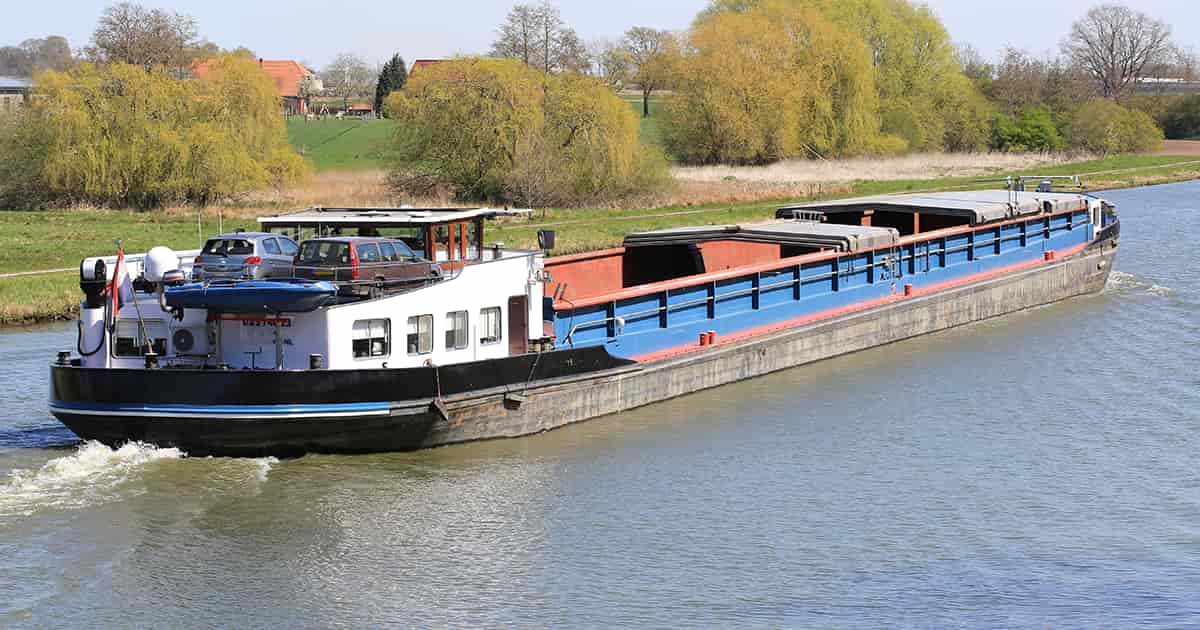
Inland vessels run generators around the clock for propulsion and onboard load, while cities tighten emission rules on the waterways that run through their centres.
Diesel on the water, in the middle of the city
Inland shipping is the most efficient way to move freight per tonne-kilometre, yet almost every barge still runs a diesel engine continuously for propulsion under way and for onboard hotel load at the quay. Those engines sit in canals and rivers that run straight through city centres, exactly where air-quality and noise rules are tightening fastest. Operators face zero-emission zones, shore-power mandates and rising fuel costs on assets expected to work for decades, and repowering a vessel is a major capital decision with little room for error.
Carry the energy, not just the fuel
Battery storage lets a vessel take on clean energy the way it once took on diesel. Stored power can cover hotel load at berth so the engine switches off entirely, handle low-speed manoeuvring in restricted zones, and smooth the load on a hybrid driveline so the engine runs at its efficient point or not at all. Charged from shore or renewables, it turns the quayside stop into a recharge rather than another hour of idling. The fuel saved at the quay alone can repay the system on a busy schedule.
Why 247 Energy
Marine duty is hard on storage: vibration, damp, wide temperature swings and tight enginerooms. 247 Energy’s supercapacitor systems tolerate a broad temperature range, charge and discharge extremely fast for manoeuvring bursts, and being non-flammable with no thermal runaway remove the fire risk that makes crews wary of large batteries below deck. Containerised, European-built, and proven on inland navigation.
Whitepaper
Battery Fire Risk and the Non-Flammable Alternative
How thermal runaway shapes the cost, siting, and insurability of energy storage — and what it means to remove the hazard rather than manage it.
James Troch, CEO — 247 Energy · August 2025 · 10 pages