A glass furnace can never be switched off, and losing power to it is a five-figure emergency.
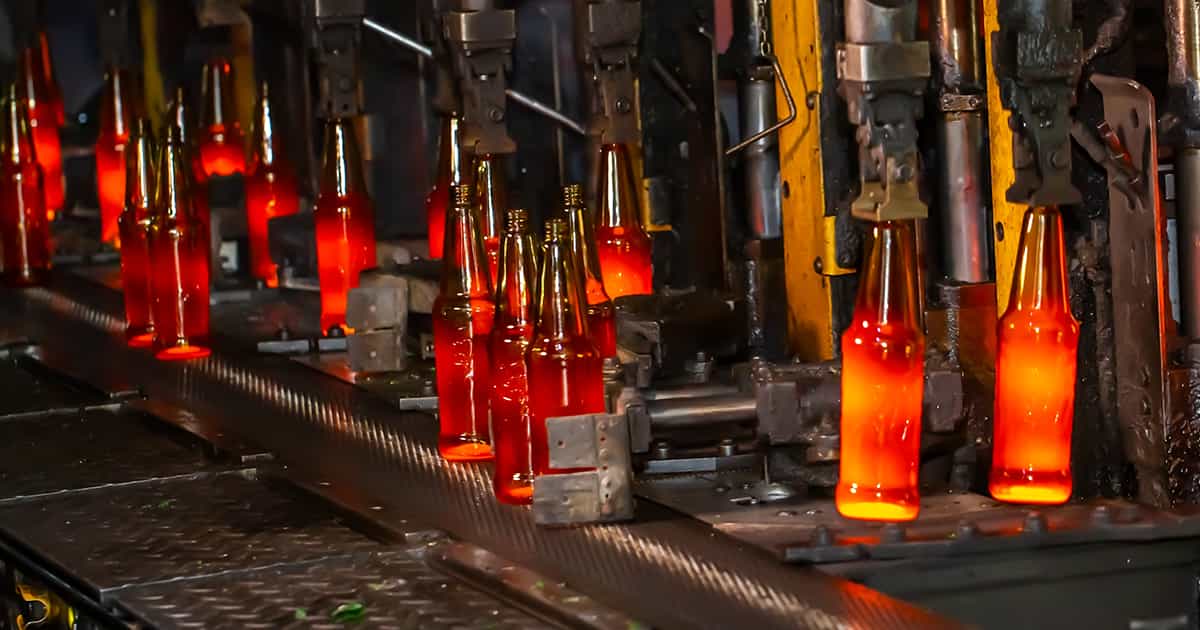
Glass and container plants melt continuously at over 1,500°C. The furnace and its forming lines never stop, so any power gap threatens product, equipment and the melt tank.
Continuous heat with no off switch
A glass works melts raw material in a furnace that runs around the clock for years between rebuilds. Forming machines, compressors and annealing lehrs depend on uninterrupted power and clean voltage. A power quality event scraps the ware in production and can damage forehearth and feeder equipment.
A longer outage is worse: the melt has to be held, and the energy needed simply to keep a tank hot through a disruption is large. On a single connection the plant also pays steep demand charges as compressors and electric boosting cycle.
A buffer between the furnace and the grid
On-site storage sits between the works and the network, riding through sags and brief interruptions and handing over cleanly to standby generation for longer events. It also caps the peaks from electric boosting and compressed-air plant, so the demand charge reflects an average load rather than the worst instant.
Why 247 Energy
A glass plant is hot, and 247 Energy supercapacitor systems run to plus 50°C without active cooling, so they need no chilled room of their own. With more than 15,000 cycles of projected life, the store handles constant daily cycling for years between rebuilds. The 247 ERP manager keeps the critical forming and control loads first in line.
Whitepaper
Supercapacitor or Lithium-Ion? A Buyer's Guide
Comparing commercial and industrial energy storage on safety, cycle life, temperature range, power, and total cost of ownership.
James Troch, CEO — 247 Energy · October 2025 · 10 pages